Velocette is one of the most revered marques from the glory days of the British motorcycle industry and a name that will always be linked to the brand is that of Ralph Seymour. As well as racing his own Velocette in the early 1950s, Ralph moved on after his retirement from active competition to become one of the most respected and best remembered specialists in preparing the Birmingham-made bikes for racing.

Between 1946 and 1952 Ralph Seymour rode his Velocette KTT in seven races on the Isle of Man
Ralph was so well-remembered that a special exhibition paying tribute to his achievements took place in the museum at Thame, the Oxfordshire town where his motorcycle dealership had been a fixture on the High Street from 1960 for over 50 years. The exhibition ran until October 25th, with a special Open Day on September 27th featuring a number of rare and significant Velocettes courtesy of the Seymour family.

The shop on Thame High Street in its 1960s hey-day
Ralph passed away on February 2nd 1994 at the age of 78 but throughout his involvement with his shop and its multiple franchises for leading British and Japanese brands it was always the Velocette marque that was his personal favourite.
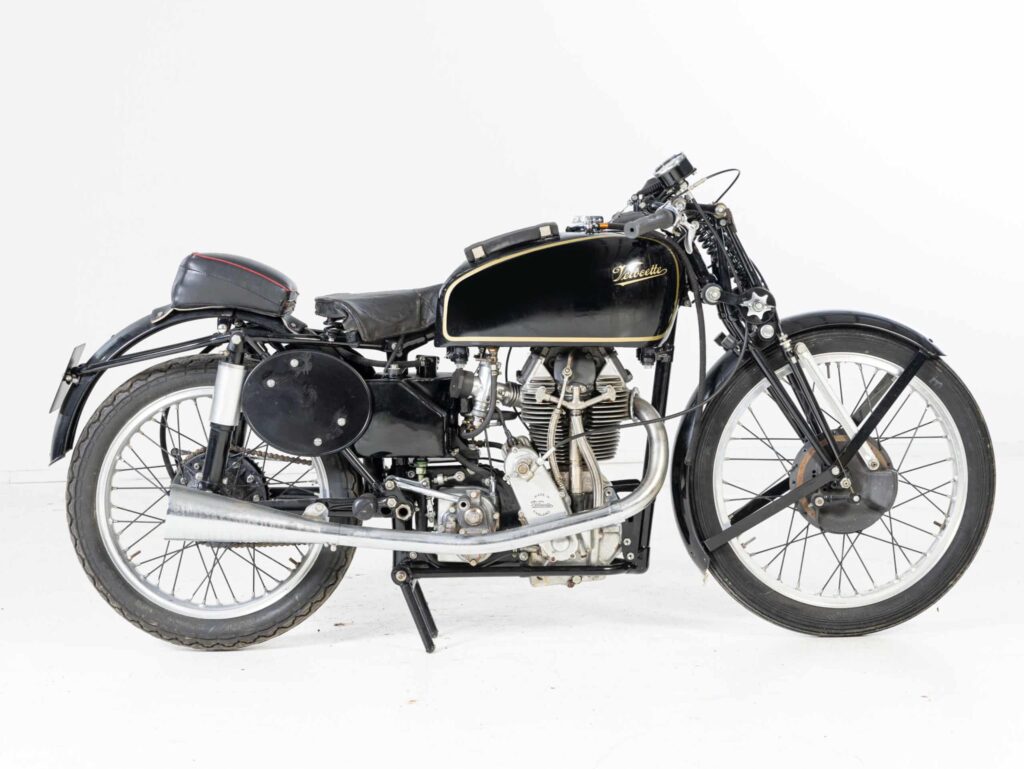
The Velocette KTT Mark VIII won three Isle of Man TT races and two World Championships
The Velocette story dated from the earliest years of the 20th century and notably successful were its 350cc KTT racers with their single-cylinder, single overhead-camshaft engines that were first raced in the mid-1920s and which scored three Isle of Man TT victories between 1926 and the end of that decade.
During the 1930s, further developments kept the KTT competitive and culminated with Stanley Woods winning the 350cc TT in both 1938 and 1939 with the Mark VIII version of the KTT that now occupies a place in the pantheon of great British racing motorcycles.
After the six-year hiatus of World War II, there was more to come from the Velocette KTT – much more! It was still the bike to beat in the 350cc class, as was proved when Bob Foster led home a clean sweep of four KTT riders in the 1947 Isle of Man TT. And even greater success came two years later when Freddie Frith rode his KTT to become the first World 350cc Champion. Finally, in 1950, Bob Foster set the seal on the KTT legend by taking a second successive world title win for Velocette.
Thanks to their ever-continuing upgrades, the various versions of the KTT had also been the choice of many privateer riders throughout the 1930s and one such rider was Ralph Seymour. Starting his racing career towards the end of the 1930s, he competed on the high-speed banked speedbowl at Brooklands in Surrey and by the age of 21 had won his first clubman-level race on his Rudge ex-works race bike.

Ralph Seymour scored the first win of his career at Brooklands on this 500cc Rudge Ulster. The special ‘fishtail’ silencer was a mandatory fitment for all competitors to placate the local homeowners!
To try and become even more competitive, Ralph sold the Rudge to fund a brand new Velocette KTT Mk VIII, which he duly purchased in July 1939. He got to use the new bike just once, in August at Donington Park, before WWII broke out a few weeks later and Ralph was off to serve with the Royal Engineers for its duration. Meanwhile, the KTT was tucked away in pieces behind his mum’s sofa for the whole of the war so as to avoid being sacrificed to the nationwide drive for metal during the later years of the conflict!
When peace came late in 1945, Ralph was duly discharged from military service and immediately set about putting the KTT back together. The bike was ready for the first post-war race in the Isle of Man – the 1946 Manx Grand Prix – and Ralph rode it to a 38th-place finish out of the 100-strong entry in the 350cc race. He raced at the Manx for the next four years, improving his best finishing positions to 21st in 1947 and 15th in 1948.

Ralph Seymour raced his KTT in seven races on the IOM – five times in the MGP and twice in the TT
In 1951 he stepped up to the TT, which in those days was generally regarded as the premier event in the World Championship. In that race Ralph gained one of the special awards for riders who finished within 10% of the winner’s speed. These were small replicas of the winner’s trophy and he gained another when he repeated that feat in 1952. By then Ralph was 36 years old and he retired from racing at the end of the season to concentrate on his career in engineering. He still remained involved in racing, however, and never lost his enthusiasm for the Velocette marque so a big part of that engineering career was devoted to preparing its bikes for racing. He became especially well-known for the preparation of the overhead-camshaft KTT racing engines and so prized were the KTT engines by the time that they had become ‘classics’ that one of Ralph’s American customers personally accompanied his on the return trip flights from and back to San Francisco. He actually purchased the seat next to him on the each-way journey so that the engine never left his sight!
By the late years of the 1960s, the KTT MkVIII engine design was thirty years old and considered to be past its sell-by date, but in 1967, Ralph and a long-time colleague, Vern Wallis, decided to see if it was possible to give it a new lease on life by housing it in a modern motorcycle.

The unique KTT-engine Velocette Metisse is still owned by the Seymour family
Into a Rickman Metisse rolling chassis went a meticulously prepared Seymour KTT engine for Vern to race in the 1967 350cc TT on the Isle of Man. The bike’s debut unfortunately ended due to clutch failure, but its construction led to a run of 15 further Metisse Velocettes being built for race use by Ralph and a further six for road riders.
By no means were all of these bikes powered by the KTT engine, as these were already in short supply. Most of them used another famous Velocette single-cylinder engine, the 500cc Venom with pushrod-actuated overhead valves that was at the top of the M-series road bike product line.
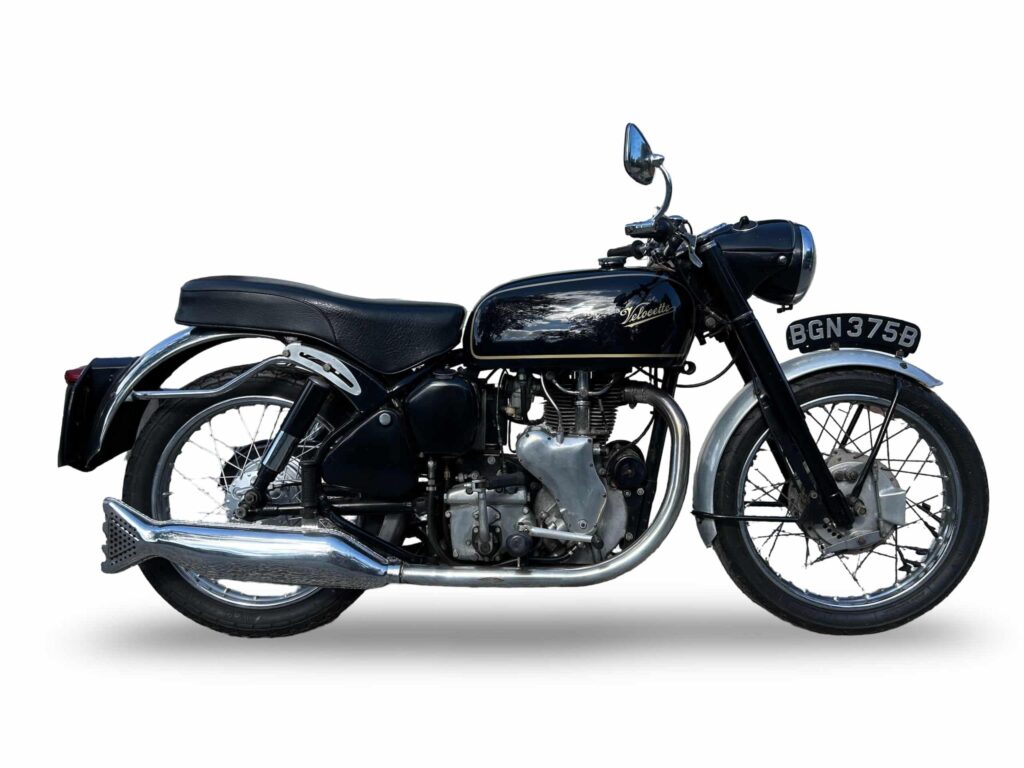
The 500cc Venom was the leading British 500cc machine in the mid-1960s

The ultimate Venom was the clubman racer version christened the “Thruxton” in tribute to Velocette’s four 500cc class victories in the important 500 Miles race at that Hampshire circuit in the 1960s.
From 1964 onwards, the Venom had established itself as the leading 500cc machine in endurance events for production road bikes and had its ultimate success in the 1967 Isle of Man Production TT when Neil Kelly and Keith Heckles scored a 1-2 for Velocette in the 500cc class.
It was therefore not surprising that this was the power unit chosen by Ralph for most of his Metisse Velocettes, and in 1973, one of these was responsible for one of Ralph’s proudest moments. That was when Fred Walton finished 19th in the Isle of Man Senior TT on the only Velocette in a 75-strong field packed with Japanese two-strokes and the best of the latest British four-stroke singles at that time, such as the Seeley Matchless G50.

Fred Walton and Ralph Seymour combined their talents to provide Velocette with a fine TT swansong
It was the last time that a Velocette was entered for the Senior TT and represented both a great personal achievement for Fred and a fitting way to remember the man who built the bike – Ralph Seymour. He truly was a Velocette legend.
Words: Bruce Cox
Photographs: The Seymour Family Collection